

Capabilities
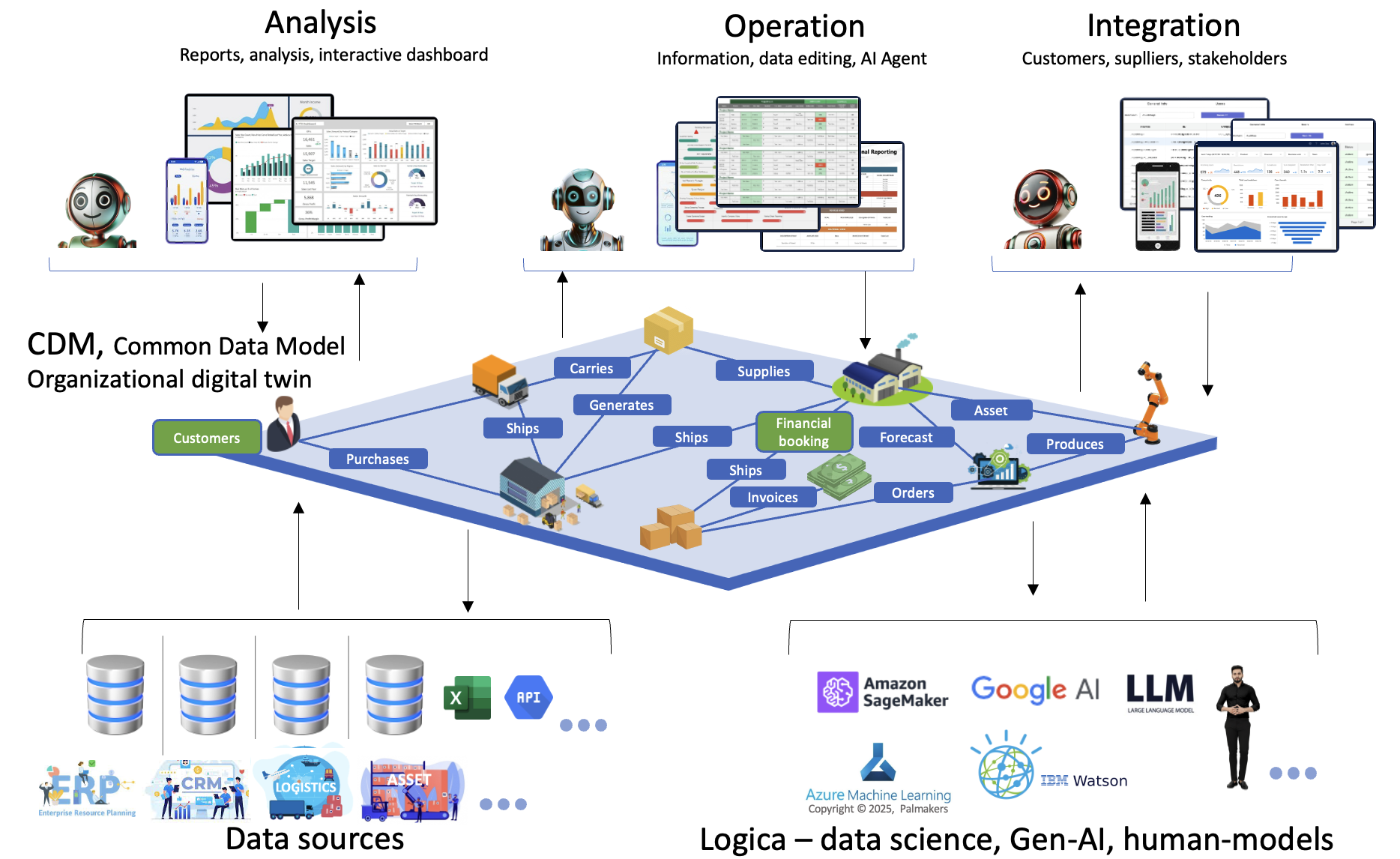
Leveraging ICT for business with diverse data from ERP, CRM, logistics, and autonomous systems requires an alternative architecture for optimal analysis, AI, and feedback.
How Operational Intelligence Works
The digital twin
Operational intelligence connects trusted data, business context and the ability to act. Palmakers brings these together through Palantir Foundry and Enterprise AI, with the Ontology representing the objects, relationships and actions that define how your organisation operates.
To grasp the value of this new architecture, we begin with three essential decision-making elements:
- Data (information for decisions)
- Logic (decision evaluation process)
- Action (decision implementation).
- Data (information for decisions)
- Logic (decision evaluation process)
- Action (decision implementation).
Data
Build a trusted foundation from enterprise systems, documents and operational signals. Governed data products provide consistent, reusable information for business teams, applications and AI.
Logic
Apply business rules, analytical models, human judgement and AI to evaluate situations and determine the next step. The Ontology gives this reasoning the business context it needs.
Logic
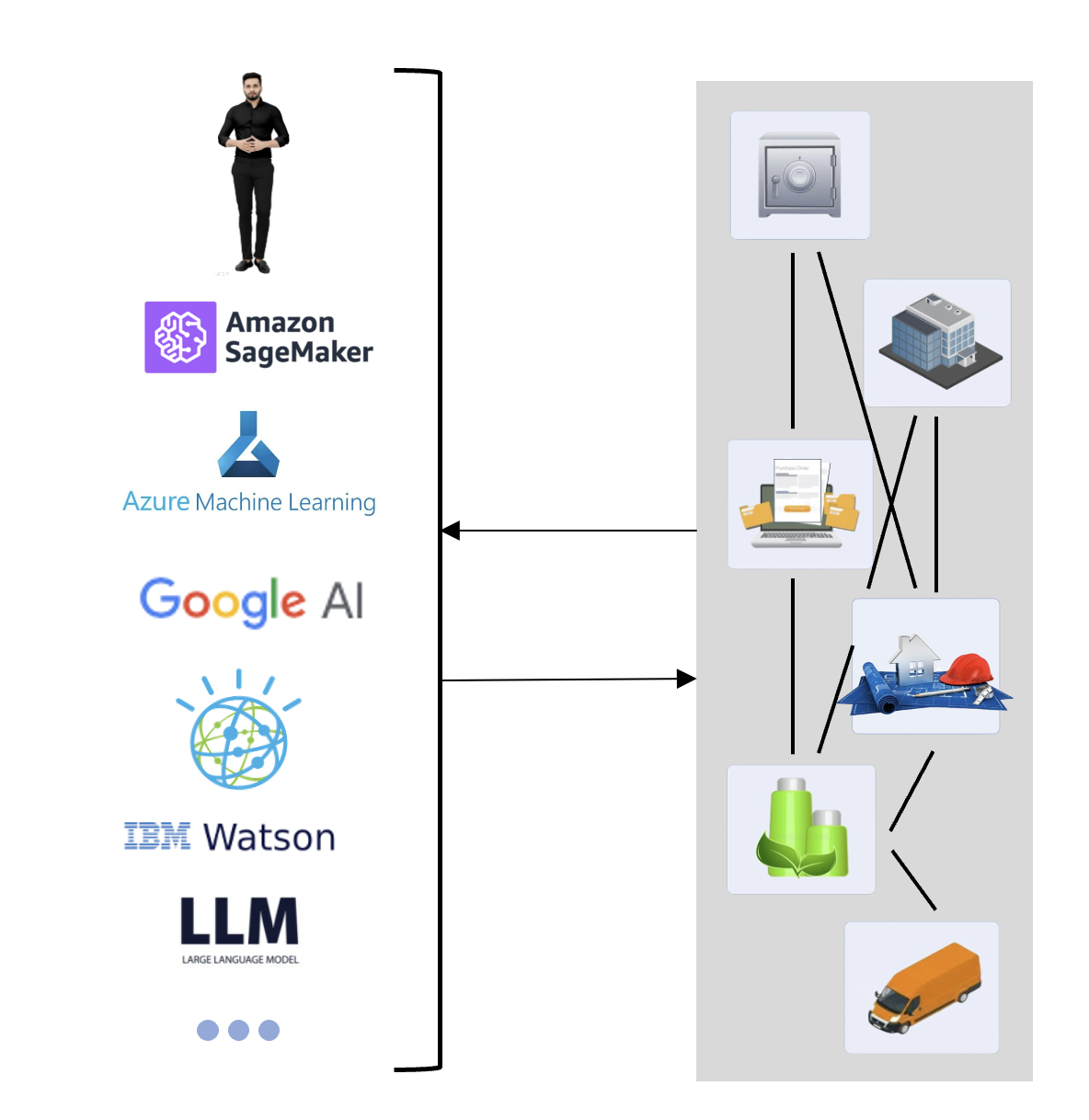
Data is crucial, but decision-making requires a balance with logic and AI. Despite AI-driven decisions, employees shape workflows, utilizing AI's learning and reasoning to automate tasks, enhance efficiency, and analyze data for informed decisions. Ontology connects human and machine logic, akin to business logic in customer service interactions. The next step involves developing the model for executing the decision (the action).
Action
Build a trusted foundation from enterprise systems, documents and operational signals. Governed data products provide consistent, reusable information for business teams, applications and AI.
Data
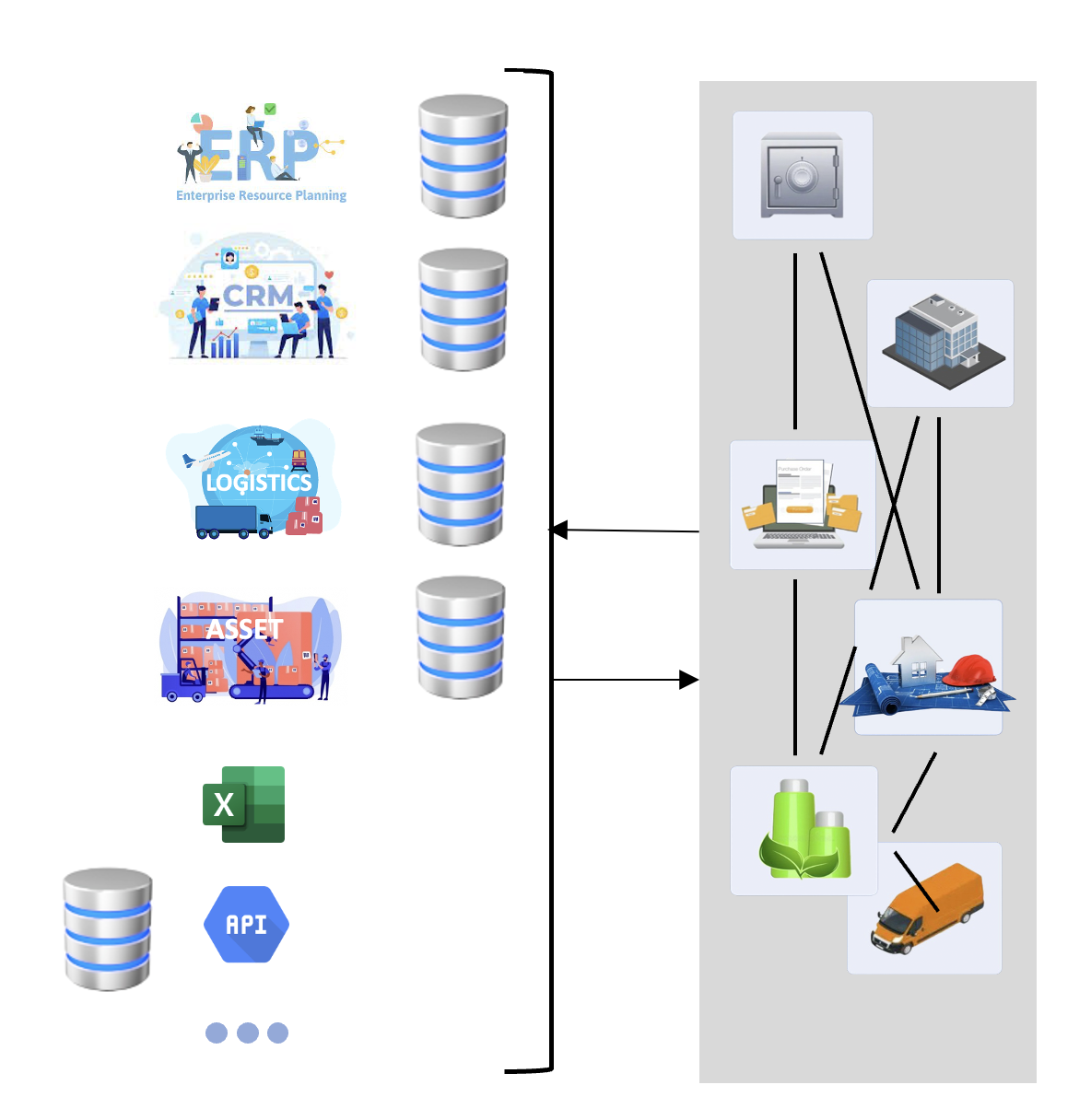
Organizational data is rapidly expanding in volume, variety, and velocity, taking diverse forms such as (un)structured, streaming, edge data, and decision-generated data from employees. This "decision data" includes details about:
- decisions made,
- options evaluated,
- implications for data changes, and the subsequent updates to source systems.
Logic
Data is crucial, but decision-making requires a balance with logic and AI. Despite AI-driven decisions, employees shape workflows, utilizing AI's learning and reasoning to automate tasks, enhance efficiency, and analyze data for informed decisions. Ontology connects human and machine logic, akin to business logic in customer service interactions. The next step involves developing the model for executing the decision (the action).
Action
The Ontology Connects It All
Ontology
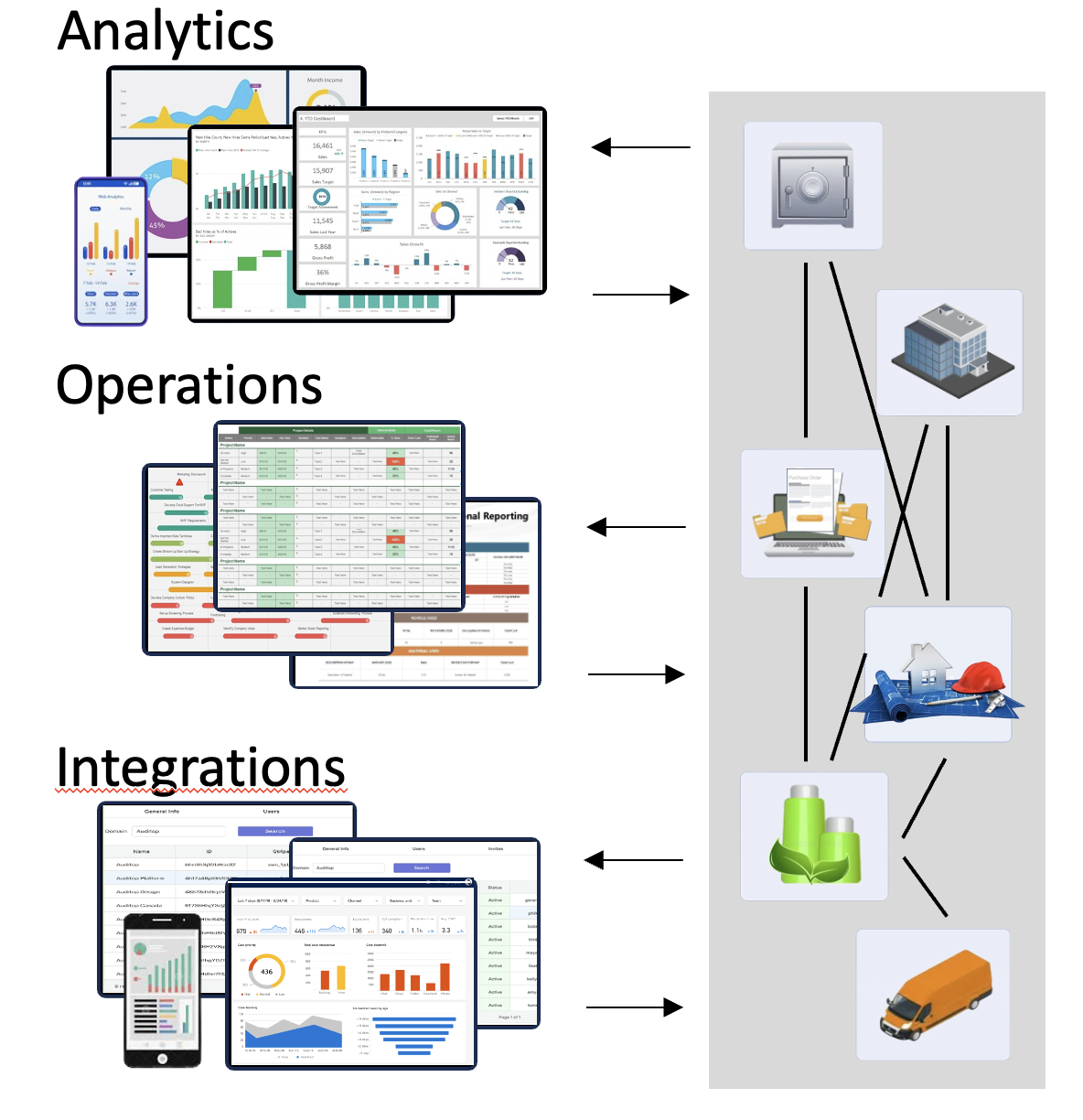
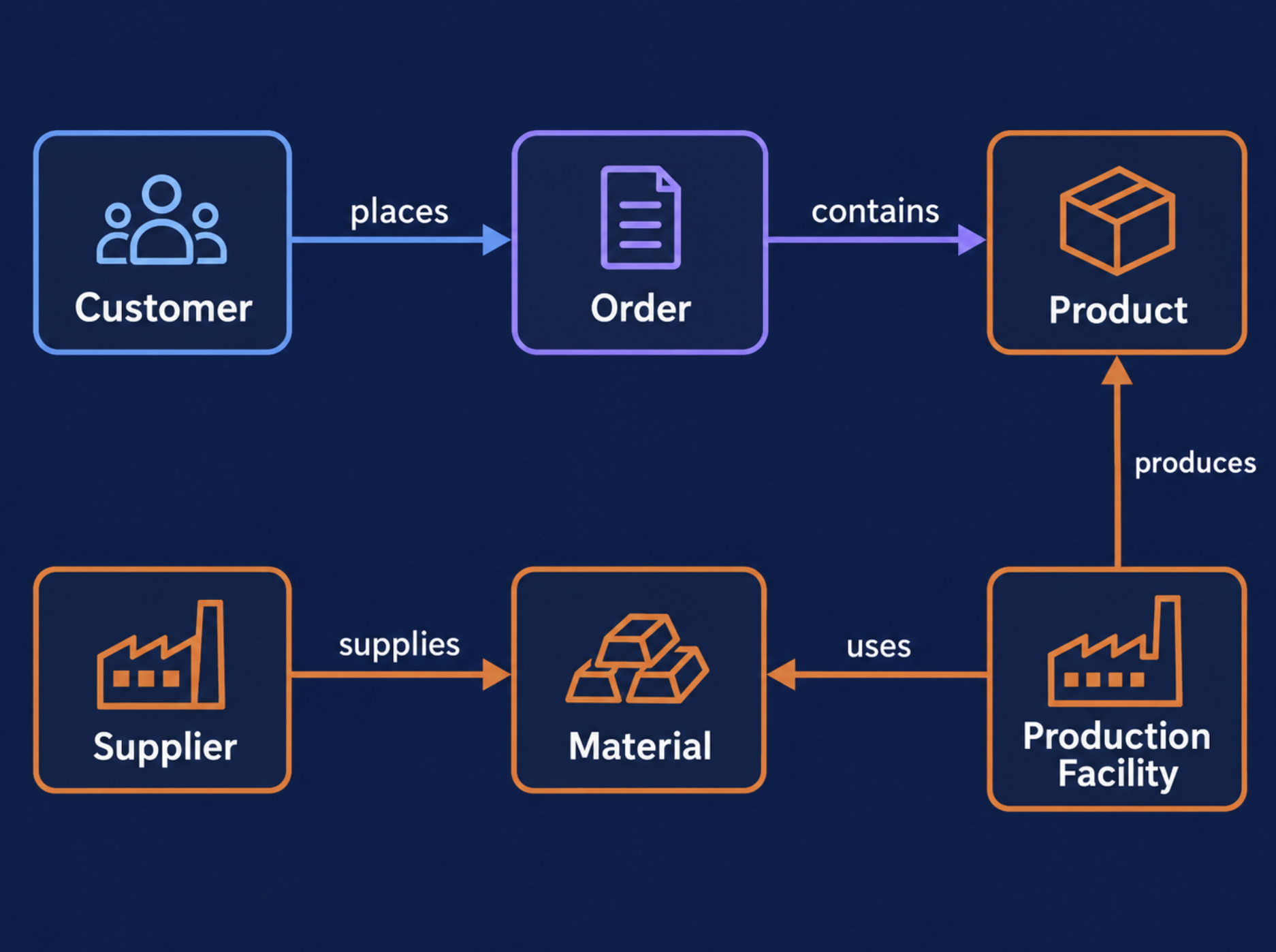
The Ontology represents customers, assets, orders and other business objects together with their relationships and permitted actions. It provides an operational digital twin: a shared representation of the business that people and AI can use to understand situations and take action.
Linked Object Types
Connect customers, orders, suppliers and assets in a shared operational model. These relationships help teams understand dependencies and trace how a change in one part of the business affects another—for example, how a delayed supplier delivery impacts production and customer commitments.
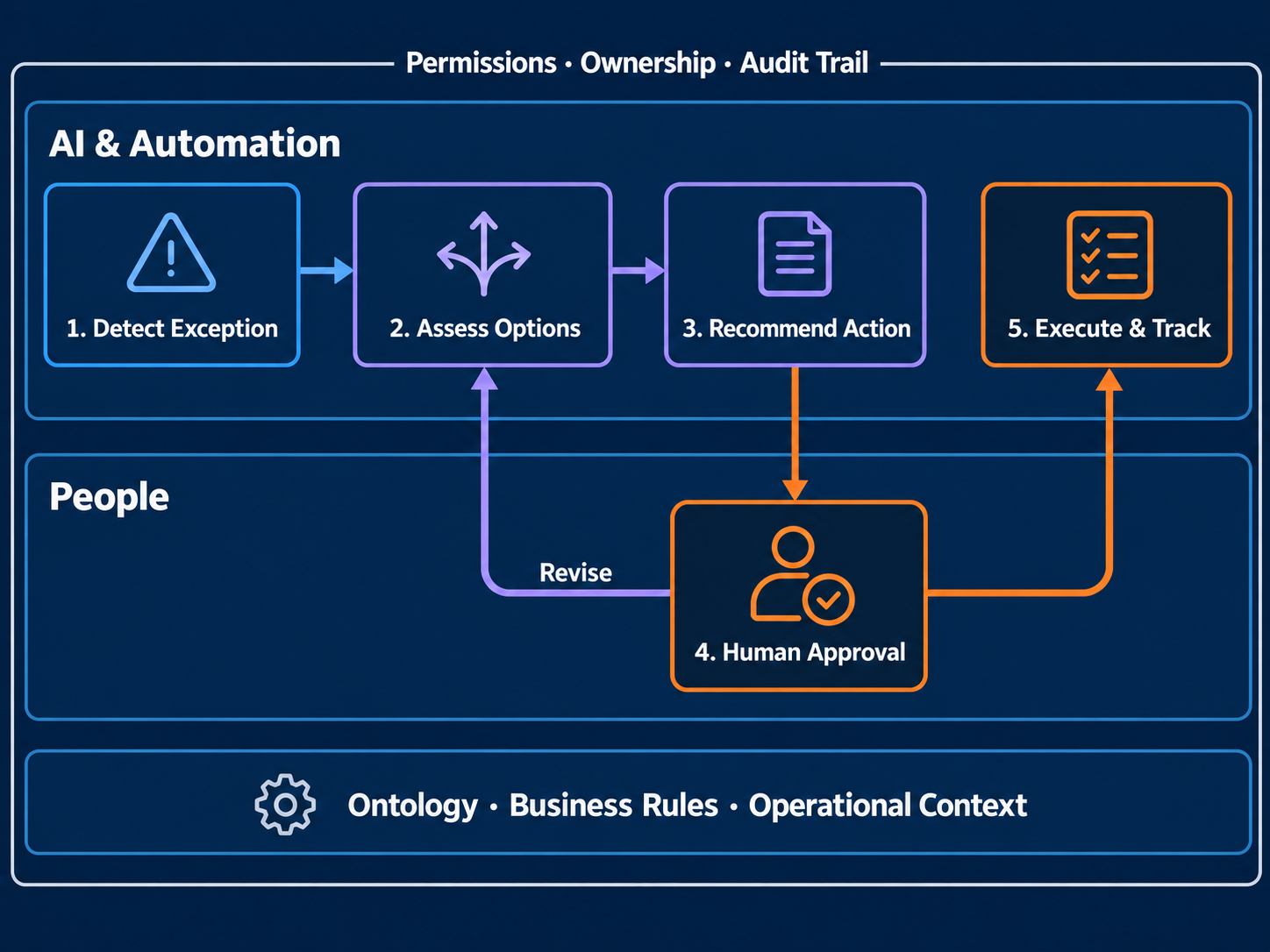
Human & AI Workflows
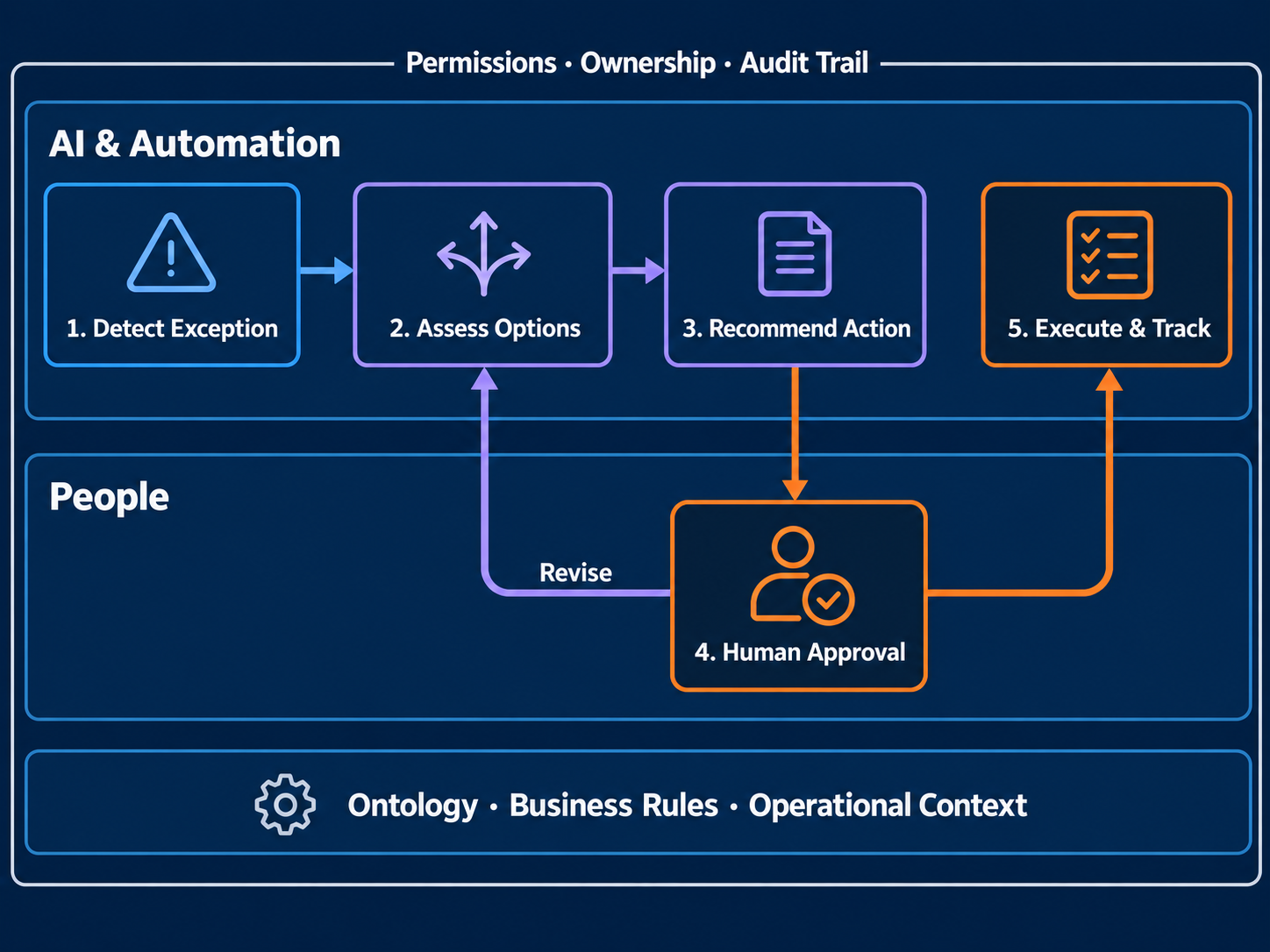
Connect customers, orders, suppliers and assets in a shared operational model. These relationships help teams understand dependencies and trace how a change in one part of the business affects another—for example, how a delayed supplier delivery impacts production and customer commitments.
Turn operational context into timely action. Teams can evaluate alternatives, approve changes and trigger workflows directly from the Ontology—for example, reallocating inventory or rescheduling maintenance. Record decisions and their outcomes to support traceability and continuous improvement.
News